So… Is SGU a “Real” Med School or Just Caribbean Clickbait?
If you’ve Googled “Is SGU legit?” or “Can I match from a Caribbean med school?” you’re not alone. St. George’s University School of Medicine (SGU) in Grenada is one of the most talked-about international med schools on the planet—loved by some, side-eyed by others.
Here’s the short version:
-
SGU is a private medical school in Grenada, founded in the 1970s, with thousands of grads practicing in the U.S., Canada, the UK and beyond.
-
It’s accredited by the Grenada Medical and Dental Council (GMDC), which is recognized by the World Federation for Medical Education (WFME) and the U.S. National Committee on Foreign Medical Education and Accreditation (NCFMEA) — meaning it meets standards comparable to U.S. med schools and keeps you eligible for USMLE and U.S. residency pathways.
-
SGU grads consistently secure hundreds of U.S. residency positions each year, and for over a decade SGU has placed more grads into U.S. residencies than any other single med school.
This post is your no-fluff, student-style explainer designed for:
-
U.S., Canadian, and international premeds
-
Parents of applicants
-
Current med students considering a transfer
-
Spouses/partners and premed advisors trying to make sense of SGU
Snapshot: What Makes SGU Different?
Location & vibe
-
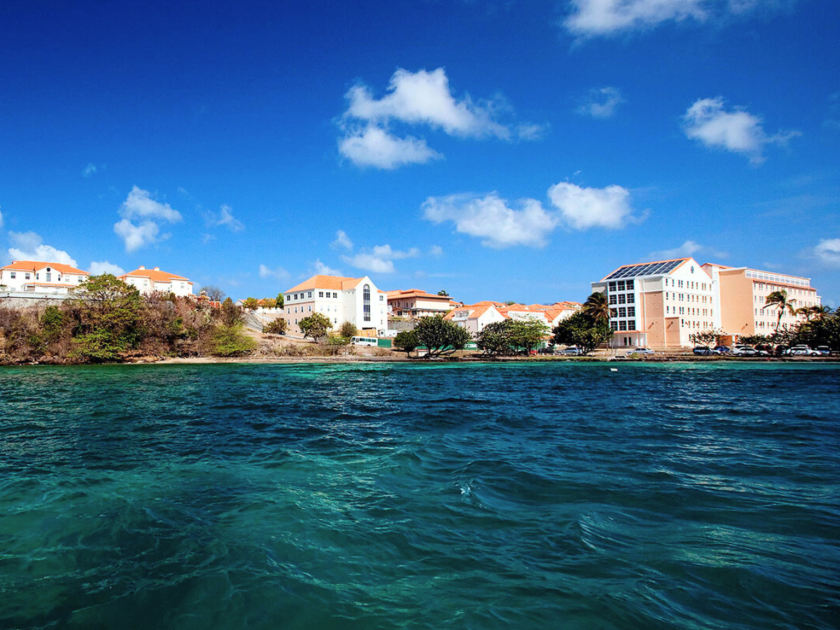
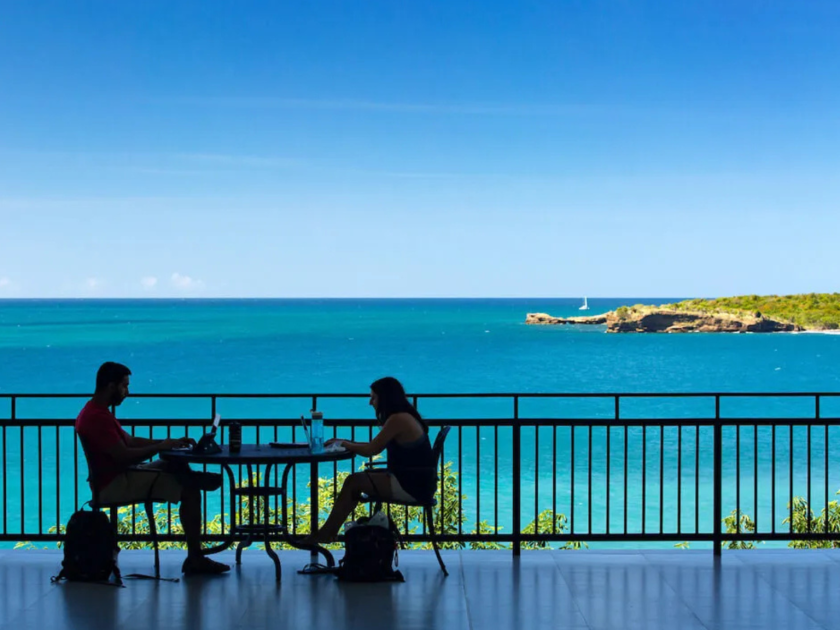
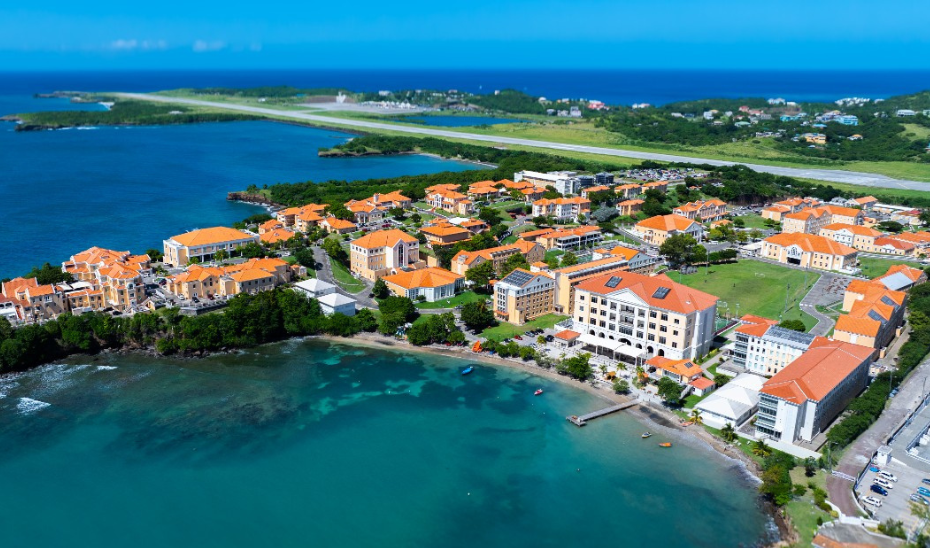
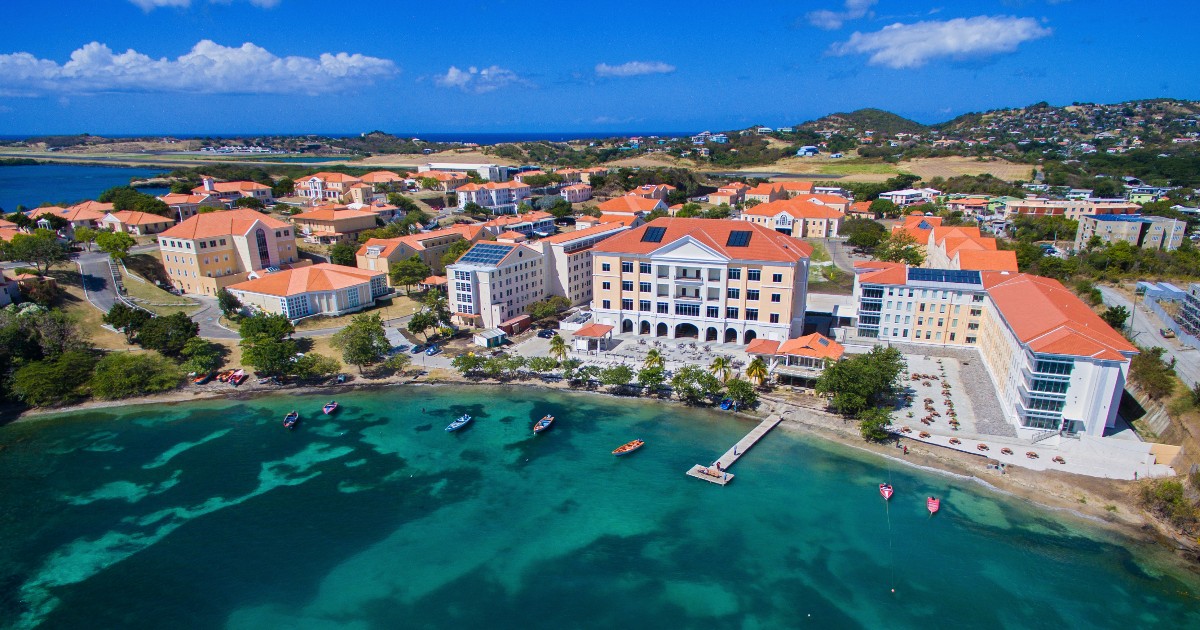
Campus: True Blue, on the southern tip of Grenada – think turquoise water, airport 10–15 minutes away, and a campus built into the coastline.
-
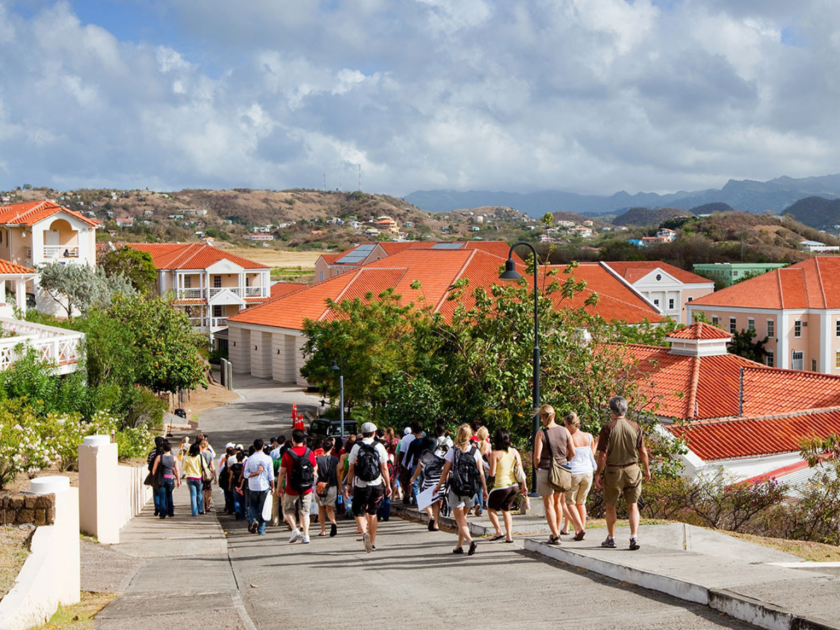
Community: SGU has thousands of med students from the U.S., Canada, and all over the world, so it’s very international and English-speaking.
Accreditation & exam eligibility
-
SGU School of Medicine is accredited by the Grenada Medical and Dental Council (GMDC).
-
GMDC is recognized by WFME and NCFMEA, which keeps SGU students eligible for:
-
USMLE Step 1 & 2
-
U.S. residency match (NRMP)
-
U.S. federal loans for eligible U.S. citizens and permanent residents.
-
Residency outcomes (big one)
Recent info shows:
-
910+ SGU students and grads secured U.S. residencies in the 2024 Match, and 1,000+ in the 2025 cycle.
-
SGU is repeatedly described as the largest single provider of new doctors to the U.S. healthcare system, and has placed over 20,000+ physician grads into the global workforce.
-
Third-party sources report very competitive match and USMLE pass rates for SGU compared with other Caribbean schools (e.g. 90%+ Step 1 pass rates for international first-time takers in recent years, and high match rates for eligible candidates).
Translation: You can match from SGU, but—as with any med school—nothing is guaranteed, and it’s extremely dependent on your own performance, exam scores, and specialty choices.
Admissions & Programs: Who Actually Gets In?
SGU offers multiple MD pathways:
-
4-Year MD – for students who’ve completed the usual pre-med requirements.
-
5- and 6-Year MD routes – for international or younger students who are earlier in their academic journey and need preclinical/premed foundations.
What SGU typically looks for (broadly):
-
Solid science coursework
-
Decent GPA (especially trend in upper-level sciences)
-
MCAT for most U.S./Canadian applicants (scores vary; SGU tends to be more flexible than U.S. MD but still selective)
-
Evidence you can handle a heavy, fast-paced curriculum
Stats change every cycle, so for exact minimums and averages, you always want to check SGU’s official admissions page or speak with an admissions counselor.
Accreditation, CAAM-HP, and All That Drama (Explained Simply)
If you’ve gone down Reddit rabbit holes, you’ve probably seen:
“Wait, didn’t SGU leave CAAM-HP? Is that bad?”
Here’s the simple version based on current info:
-
SGU previously held accreditation from CAAM-HP, a respected Caribbean accreditor.
-
SGU voluntarily withdrew from CAAM-HP in 2021.
-
SGU is now accredited by GMDC, which is WFME-recognized through 2032 and deemed comparable to U.S. standards by NCFMEA.
Why this matters to you:
-
WFME recognition is what ECFMG cares about for international grads after 2024.
-
GMDC’s WFME recognition means SGU students keep full access to USMLE, the Match, and U.S. licensure pathways, provided they meet individual state and program requirements.
So the key question is less “Do they have CAAM-HP?” and more “Does their accreditation keep me eligible for USMLE and U.S./Canadian practice?”
Right now, the answer to that is yes, with the usual caveats that policies evolve and you must check state-by-state requirements.
Video credit: @StGeorgesU
Money Talk: Tuition, Cost of Living, and How People Actually Pay
Tuition
Exact numbers change every year (and you should always check the up-to-date SGU fee schedule), but realistically you’re looking at a six-figure total cost of attendance over the full MD route once you include:
-
Tuition and fees
-
Housing (on-campus and then off-campus)
-
Flights, visa/immigration costs
-
Books, equipment, exam fees, etc.
Financing & aid
Good news (especially for U.S. & some Canadian students):
-
Because SGU is accredited by GMDC and recognized appropriately, eligible U.S. students can access Federal Direct Student Loans.
-
SGU and outside sources also offer scholarships and institutional aid, and some Canadian banks provide lines of credit to Canadians studying abroad.
Cost of living in Grenada
Grenada is generally cheaper than big U.S./Canadian cities, especially compared to places like New York:
-
Some analyses suggest Grenada’s cost of living can be around 50–60% lower than New York City, depending on lifestyle.
-
A sample monthly budget for a single person in a “good” area of Grenada shows:
-
Rent (1-bedroom): ~2,500 XCD
-
Utilities: ~450 XCD
-
Food: ~1,000 XCD
-
Transport, internet, healthcare, fun, etc., bringing the total to around 5,250 XCD/month (roughly US$1,900–2,000 at typical rates).
-
Many SGU students keep costs down by:
-
Splitting apartments with roommates
-
Cooking at home and using local markets
-
Using campus bus, local minibuses, or shared rides instead of owning a car
Clinical Rotations: Will You Be “Stuck in the Caribbean”?
Quick reassurance: No, you’re not stuck.
-
SGU has 70+–75+ affiliated hospitals and health systems in the U.S. and UK where students complete core and elective rotations.
-
There are 14 UK clinical sites for students who opt for UK rotations, giving access to the NHS and a different healthcare system style.
Usually, the path looks roughly like:
-
Basic Sciences – in Grenada (or partly in the UK pathway, then you still finish in Grenada).
-
Clinical Years – mostly in the U.S. and/or UK, plus limited options elsewhere depending on agreements and your visa/eligibility.
Who SGU Is (and Isn’t) a Good Fit For
U.S. Premed Student
-
You’re determined to become a physician, but:
-
Your GPA/MCAT combo isn’t getting traction at U.S. MD schools, and DO options are limited.
-
-
You should only consider SGU after:
-
Retaking MCAT if needed
-
Exploring DO and SMP/post-bacc options
-
Being honest about your work ethic and resilience
-
Canadian Premed Student
-
SGU is very popular with Canadians and has been increasingly successful placing grads into Canadian residencies and electives.
-
You’ll need to think hard about:
-
Your long-term plan (Canada vs U.S.)
-
Provincial licensing preferences for international grads
-
Financing via Canadian LOCs and scholarships
-
International Premed Student
-
SGU can be a strong pathway if your home country recognizes SGU or if you’re targeting U.S./UK practice.
-
Check:
-
Whether your home country’s medical council accepts SGU
-
Visa pathways for the U.S./UK post-residency
-
Parent of Applicant
Things parents usually care about:
-
Safety:
-
Grenada is considered relatively safe and is rated at the lowest U.S. advisory level (“exercise normal precautions”). Crime tends to be opportunistic, and SGU has 24/7 campus security and a Department of Public Safety.
-
-
Support services:
-
SGU offers health services, counseling, academic support, and psychological services on campus and via telehealth.
-
Current Med Student Considering a Transfer
-
Transferring in is possible in some cases, but:
-
Seat availability can be tight
-
You’ll need detailed transcript evaluation
-
Some licensing bodies look more closely at “transfer patterns”
-
Spouse/Partner
You’ll want to know:
-
Housing options for couples/families around True Blue, Lance aux Épines, Grand Anse, etc.
-
Visa rules for dependents (this depends on your nationality; always check official Grenada government guidance and SGU’s international office).
-
Access to childcare, schools, and remote work options.
Premed Advisor
For advisors, SGU is:
-
A serious option for students who:
-
Have exhausted realistic U.S./Canada pathways
-
Are ready to work extremely hard
-
Understand the risks and competition for certain specialties
-
-
Not a shortcut, not a guarantee, and not a “backup you casually recommend” without a very detailed conversation.
Mini FAQ
“Can I practice in all 50 U.S. states as an SGU grad?”
Generally yes, assuming you meet all ECFMG, USMLE, residency, and state-specific requirements. SGU’s accreditation and recognitions are structured to keep those doors open, but each state has its own licensing board and you must check individually.
“Is SGU a scam?”
No. It’s a real, accredited medical school with thousands of practicing grads globally. But it’s also an intense, expensive path in a highly competitive space. You need realistic expectations and a strong work ethic.
“Can I match into competitive specialties from SGU?”
Yes—but it’s rare, and usually involves very strong scores, research, and networking. The bulk of matches are in primary care and other less competitive specialties, which is true for many med schools.
Takeaway
For the right student—motivated, resilient, and realistic—SGU can absolutely be a viable path to becoming a doctor in the U.S., Canada, or elsewhere. Your outcome will depend far more on your performance than your postal code.
Part 2 and 3 will zoom in on two huge decision points:
-
Where you’ll live (Housing & Neighborhoods)
-
What daily life in Grenada actually feels like as an SGU student